Annual economic losses in southern Ukraine due to the lack of irrigation are estimated at $300 million
Category:
 News
News
Ukraine exports products to 173 countries, but our role as a guarantor of global food security faces unprecedented challenges. The causes include not only the war but also the water resources crisis, irrigation issues, and the impact of climate change.
Over the past 30 years, the average temperature in the country has increased by 1.2°C. While the optimal level of precipitation for grain yields is about 700 mm, actual indicators are often lower, making production vulnerable.
At the same time, the war has significantly worsened the condition of water infrastructure. Since the start of the full-scale invasion, systematic destruction has been recorded:
- 230 documented incidents of damage to dams, bridges, and water supply and sewerage facilities;
- About 6 million people have lost access to quality drinking water;
- Ukraine has lost about one third of its total water resources.
The consequences are especially severe in the southern and eastern regions following the destruction of the Kakhovka Hydropower Plant. The collapse of the Kakhovka Reservoir resulted in the loss of 18.2 km³ of water, accounting for about 10% of the country’s total water resources for the agricultural sector, and damaged irrigation systems across 750,000 hectares of agricultural land. Annual economic losses due to the absence of irrigation are estimated at $300 million. Production on irrigated land fell by 89%, specifically:
- grains and legumes: down 93% (from 608.9 thousand tons to 44.4 thousand tons);
- oilseeds: down 98% (from 588.5 thousand tons to 13.1 thousand tons);
- vegetables: down 85% (from 910 thousand tons to 140 thousand tons).
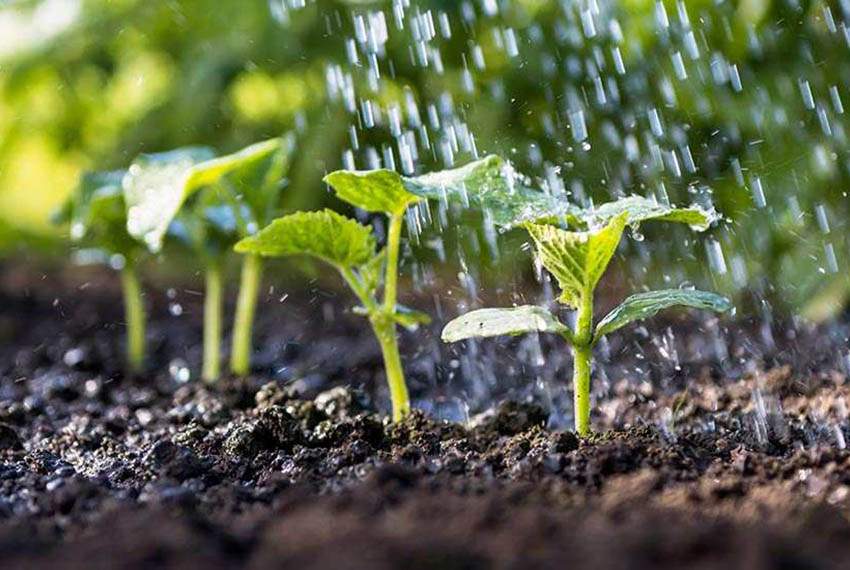
It is impossible to restore things “as they were,” but Ukraine is adapting to new conditions. Ukrainian farmers are implementing rational water-use strategies.
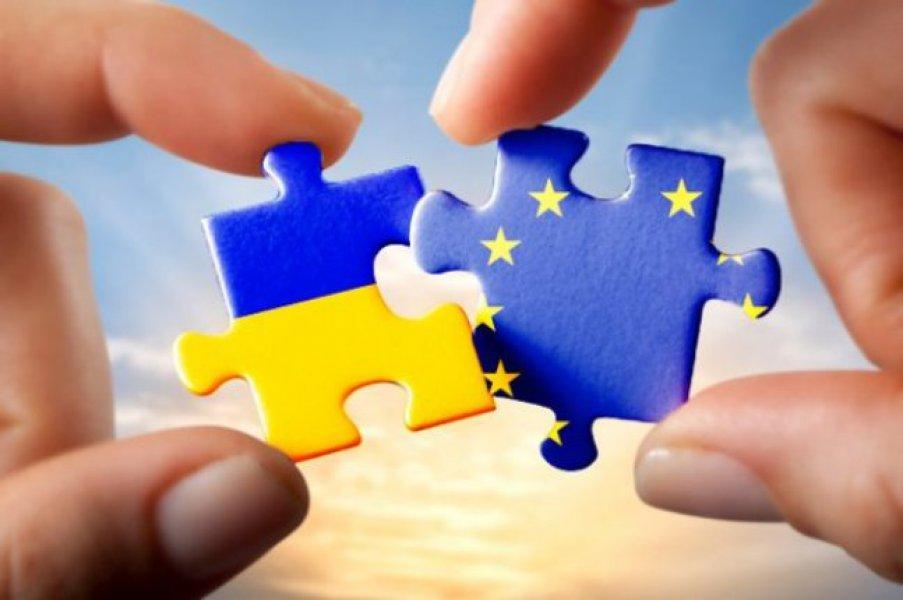
The framework for these changes is not only a market approach to competitiveness but also EU alignment. The Water Strategy 2050 has been adopted to align national policy with EU long-term planning. 9 River Basin Management Plans (2025–2030) have been approved , introducing the logic of the EU Water Framework Directive: water management shifts from administrative borders to basin-based management. With EU support, monitoring & data systems are being upgraded to enable evidence-based management and comparable reporting.
For the EU, this means strengthening its food security, as Ukrainian drought-proof farming and modernized irrigation will help stabilize yields on the single market. Furthermore, unified approaches to transboundary waters will improve the environmental status of shared basins, particularly the Danube and Black Sea catchments.
As we see, the restoration of irrigation and effective water management is a condition not only for returning strong agricultural potential but also for the stability of Europe’s food system.