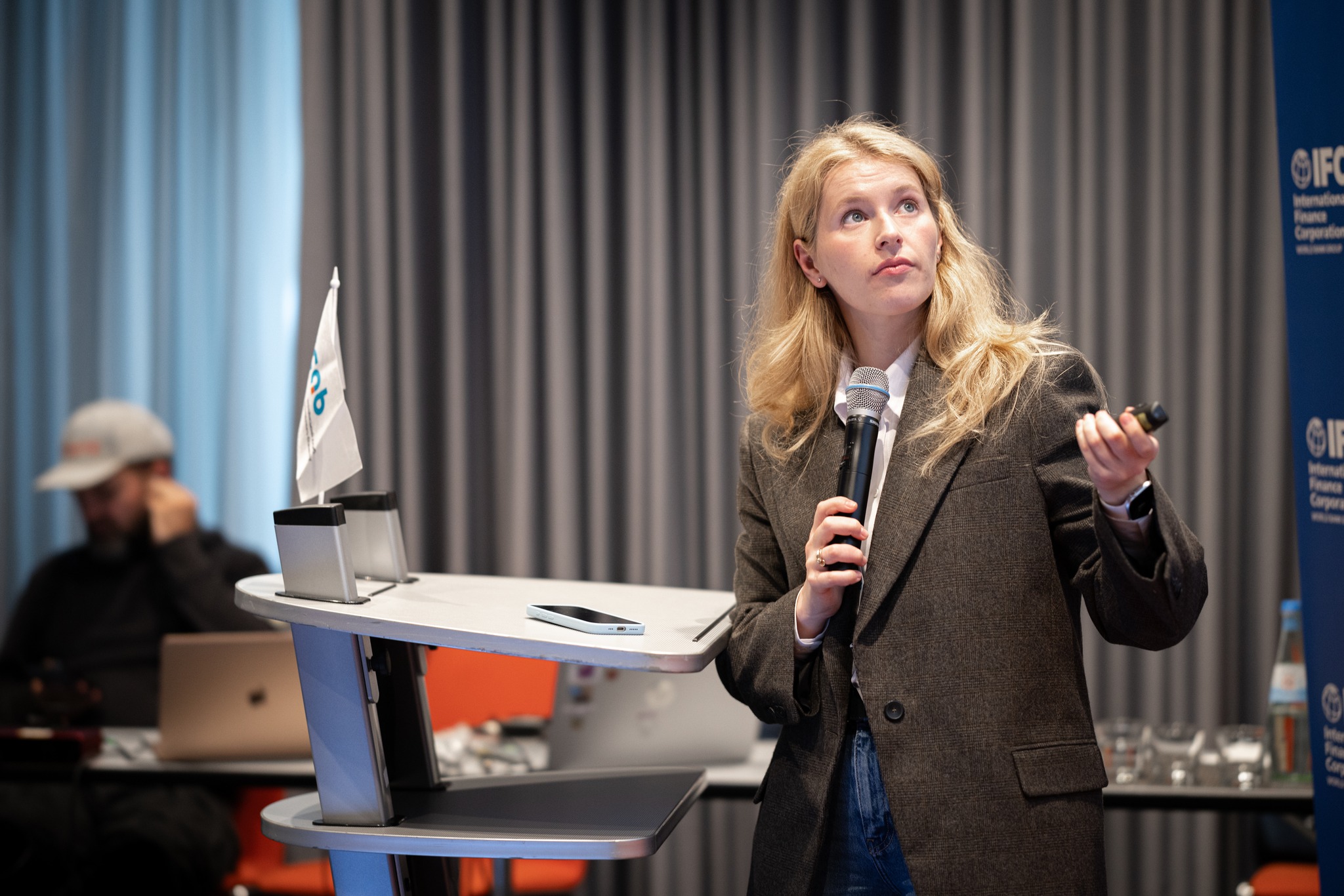
Alex Lissitsa: “The European agricultural sector has much to learn from Ukraine’s experience”
Category:
 News
News
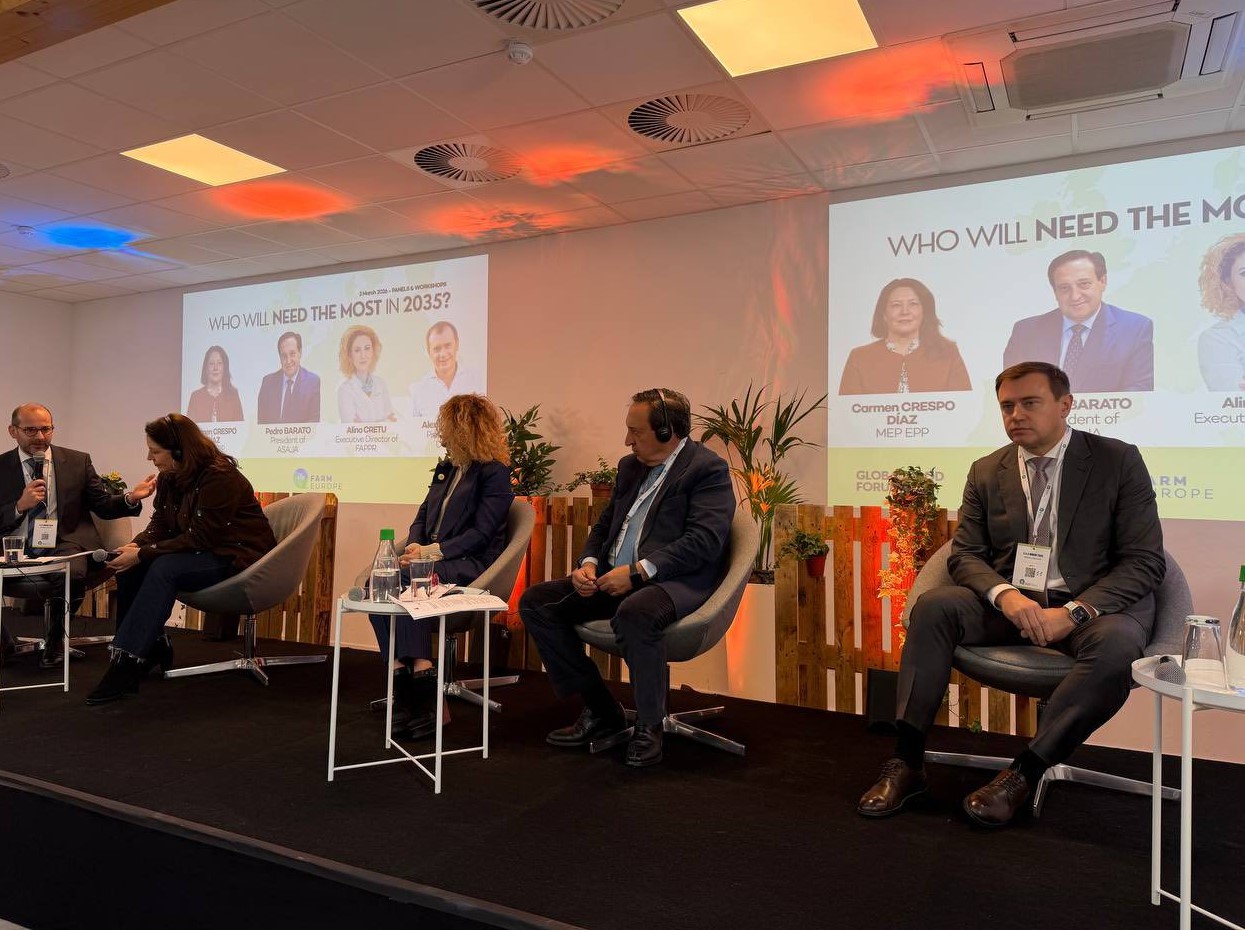
“The resilience of Ukrainian farmers is a continuous process of adaptation, learning, and survival in extreme conditions, and the European agricultural sector has much to learn from our experience,” emphasized UCAB President Alex Lissitsa during his speech on “Lessons from Ukraine’s agricultural sector for Europe in times of war” at the Global Food Forum in Brussels, organized by FARM EUROPE.
Despite finding itself in a situation where fields and infrastructure became targets for enemy attacks, the Ukrainian agricultural sector has managed to transform. Agribusinesses were forced to implement unprecedented security measures, up to using anti-drone systems during fieldwork, and completely overhaul their management strategies.
Therefore, Alex Lissitsa outlined key recommendations for European countries, shaped by the Ukrainian experience:
1. People are the core value. One of the challenges was the loss of about 30% of male workers who joined the Armed Forces of Ukraine. To compensate for this shortage, agribusinesses optimized processes and focused on attracting women to work in rural areas, particularly through UCAB educational projects.
2. Cash on accounts. The best way to prepare for a crisis is to have funds in your accounts. Thanks to a successful 2021, Ukrainian farmers had reserves that allowed them to survive the first months of the full-scale war, when exports were completely blocked.
3. Development of local supply chains. In many countries, supply chains are overly centralized. In regions under occupation, people lacked access to even basic food items and bread. Organizing local supply chains became the solution, and now almost every village has small bakeries and craft food production. This is the foundation of local food security, which EU countries should also take note of.
4. Resource optimization and energy independence. Due to a lack of finances and resources, farmers learned to reduce fertilizer use by 30%. The industry also adapted to operating without stable electricity using generators. The next crucial step, which is equally relevant for Europe, is the development of energy storage systems.
5. Forging new partnerships. When traditional export routes were blocked for half a year, Ukrainian companies were forced to seek new markets. Agribusinesses had to pivot, open alternative routes in Europe, and master railway logistics and direct sales formats. Openness to new partnerships, particularly with Ukraine, will make the European market more prepared and efficient.
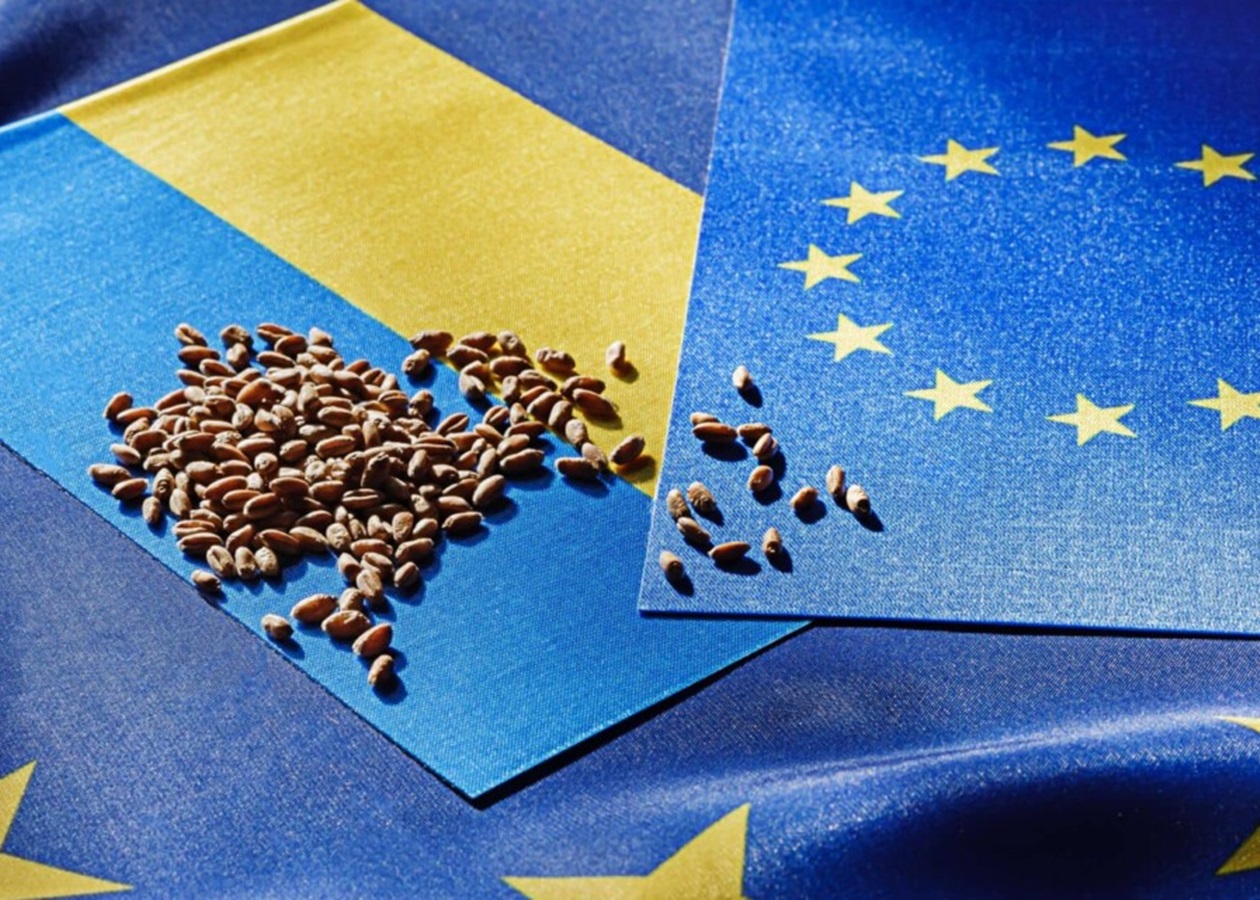
6. National interests above all. In Ukraine, farmers have learned to prioritize what the country needs, placing personal or sectoral goals second. Currently, Ukraine’s national goal is to become a member of the European Union. Ukrainian farmers understand and support this goal, because a partnership between Ukraine and the EU will be successful and mutually beneficial not only for both parties but for the entire world.