UCAB Statement on the European Commission’s Pre-Enlargement Policy Review
Category:
 News
News
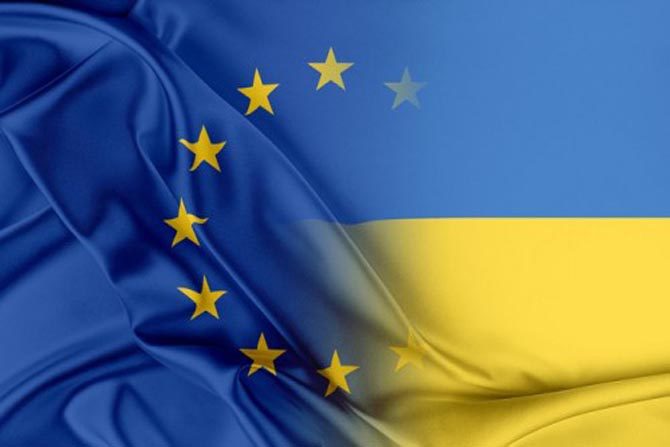
The Ukrainian Agribusiness Club (UCAB) welcomes the European Commission’s efforts to prepare the European Union for future enlargement and supports the objective of making Ukraine’s integration into the EU predictable, transparent and economically sustainable.
We also deeply appreciate the European Union’s and its citizens’ unwavering support for Ukraine in the face of Russia’s war of aggression, including its political, financial and economic assistance, as well as the solidarity shown with Ukraine and its people throughout the war. This support has been vital for the resilience of the Ukrainian state and economy, and we remain sincerely grateful for it. Ukrainian agriculture sees its future within the EU and is prepared to undertake the profound transformation required to become an integral part of the European agricultural system.
Meanwhile, we are increasingly concerned by an excessively protectionist approach towards the integration of Ukrainian agriculture.
We recognise the legitimate concerns of European farmers regarding future enlargement. Ukrainian agricultural businesses are equally interested in avoiding market shocks. This is why UCAB has consistently advocated an open and structured dialogue with European farmers, EU institutions and Member States to jointly develop a model for the future enlarged European agricultural market.
The European Commission’s Communication “Preparing for a wider Union” proposes targeted arrangements for the integration of Ukraine’s agricultural sector, including sector-specific safeguards and transitional arrangements. At the same time, Ukraine is expected to progressively assume the full body of EU agricultural, environmental, food safety and production standards.
This creates a fundamental contradiction. Ukrainian agricultural producers cannot be expected to bear the full economic cost of alignment with EU standards while being denied the corresponding perspective of full participation in the EU Single Market.
For Ukrainian agriculture, regulatory alignment is not reversible. Businesses will have to invest billions of euros in adapting production facilities, technologies, inputs and farming practices. Once these investments are made, there is no simple return to the previous production model.
Therefore, there is a point of no return in regulatory alignment. Ukraine cannot be asked to cross it without a clear and credible perspective of the market into which it is aligning.
Otherwise, Ukrainian producers risk becoming fully exposed to the costs of European standards without access to the economic opportunities of the market for which those standards were adopted. At the same time, this transformation would weaken their competitiveness on traditional third-country markets.
This is why UCAB and other prominent Ukrainian agricultural associations have proposed a structured transitional model of up to ten years from day of accession, allowing the EU and Ukraine to gradually align regulatory requirements, market access and agricultural support while avoiding disruptive market effects on either side.
Transition should facilitate integration – not become a mechanism for permanently excluding Ukrainian agriculture from the Internal Market.
The discussion about future membership also cannot ignore the reality facing Ukrainian agriculture today. Ukraine remains at war. Agricultural production, infrastructure and logistics continue to suffer from Russian attacks, while renewed disruptions to maritime transportation severely constrain access to global markets. Access to and transit via the EU market, meanwhile, remains limited.
For many Ukrainian producers, this is therefore not an abstract discussion about the architecture of future enlargement. It is a question of whether they will remain economically viable long enough to become part of it.
UCAB also recalls the EU commitment to implement flanking support measures to Ukraine, as a part of the 2025 review of the EU-Ukraine DCFTA, to help Ukrainian agricultural exporters restore and diversify access to third-country markets. The EU still has to deliver on its commitments. Referring once again to future measures for third-country market access cannot substitute for concrete support needed today.
Europe therefore needs to develop a model for agriculture with Ukraine, rather than a model for protecting European agriculture from Ukraine.
Without first developing a comprehensive vision of EU agriculture with Ukraine as a future Member State – taking into account production structures, supply chains, market balances and regulatory adaptation – designing long-term restrictions specifically for Ukrainian agriculture risks creating discriminatory outcomes.
Restrictions should be the result of an evidence-based assessment of genuinely identified risks – not the starting assumption for Ukraine’s integration.
The Ukrainian agricultural sector is ready to contribute constructively to this work. UCAB calls for Ukrainian agricultural businesses and sectoral associations to be systematically involved in discussions on agricultural integration and the relevant accession negotiations.
We also invite agricultural organisations across EU Member States to deepen direct and structured dialogue with their Ukrainian counterparts. Our common objective should be to develop a workable model for an enlarged European agricultural sector that addresses the legitimate concerns of European farmers while unlocking Ukraine’s contribution to Europe’s food security, economic resilience and global competitiveness.
Ukraine is preparing to become part of the European Union. Its agricultural sector should not merely be accommodated within the future European agricultural model. It should be involved in designing it.
UCAB EU Office in Brussels
Nazar Bobitski, Email: bobitski@ucab.ua
Tel. +380.67.172.03.64 (WhatsApp)