UCAB participated in the Danish–Ukrainian AgroTech Conference in Lviv
Category:
 News
News
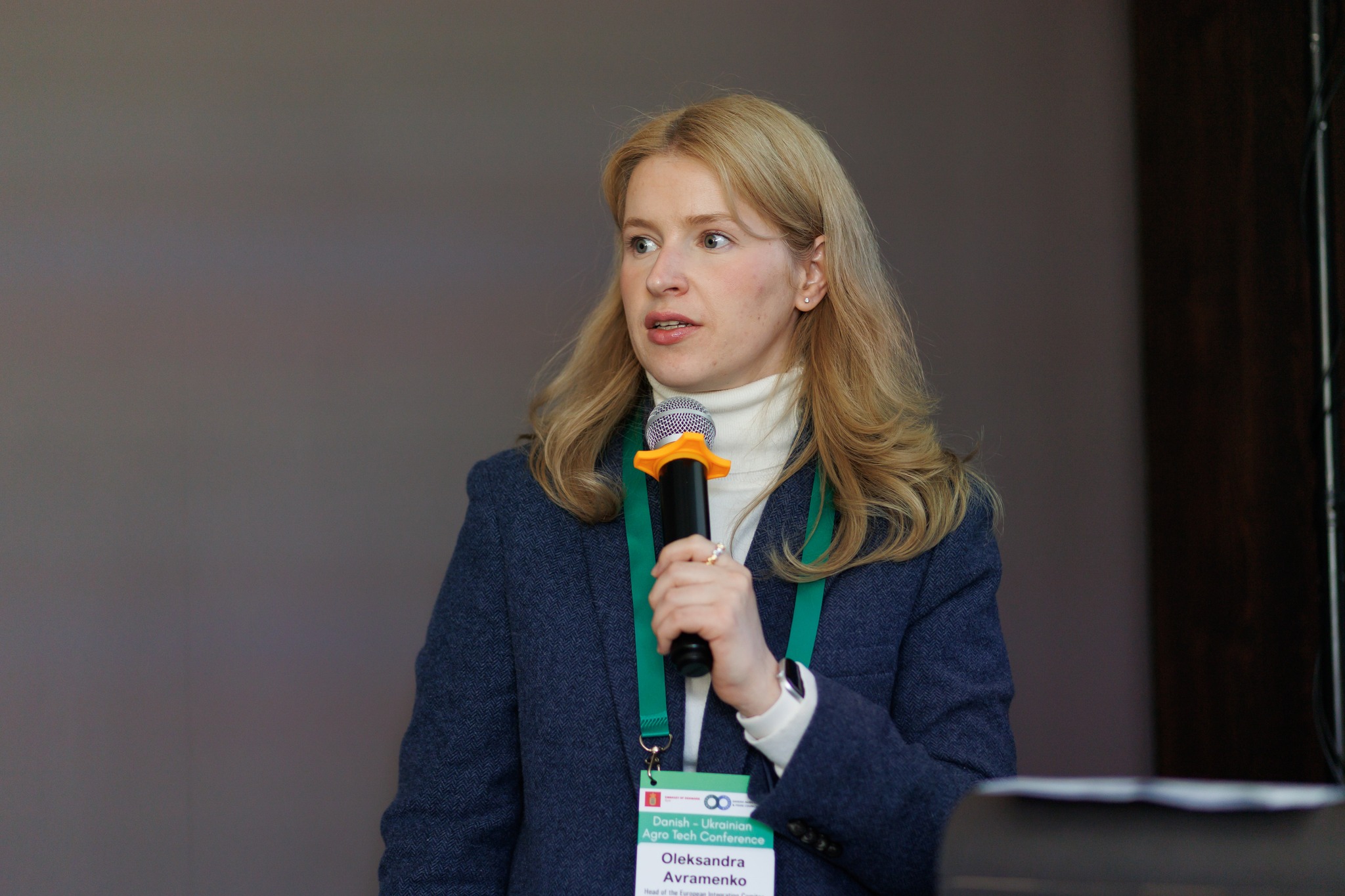
“Today, Ukraine’s agricultural sector operates under unprecedented challenges, yet remains an integral part of the European and global food system,” emphasized Head of the EU integration committee of UCAB Oleksandra Avramenko during the Danish–Ukrainian AgroTech Conference in Lviv.
“Despite the war, Ukraine continues to maintain significant production and export potential. Total sown area decreased from 28.4 million hectares in 2021 to 22.7 million hectares in 2025, while total gross output declined from 108.8 million tonnes to 79.1 million tonnes. This is a substantial reduction, yet even under these conditions the sector continues to operate and supply markets.
In 2025, agri-food exports reached $22.5 billion and covered 173 countries worldwide. This confirms that Ukraine remains a key player in the global food system and a reliable partner for the European Union.
At the same time, Ukraine’s agricultural sector faces large-scale challenges that simultaneously affect production, logistics, and the ability to adapt to EU standards: currency devaluation, rising input costs – particularly fuel and electricity – limited financial capacity, and ongoing risks to logistics. In this context, alignment with EU standards requires significant investment at both farm and sector levels; for example, the rapid implementation of new plant protection product regulations without adequate support could lead to annual losses of $4.3–6.5 billion.
At the same time, Ukraine’s potential goes far beyond overcoming challenges. Ukraine’s integration can strengthen the European Union itself by balancing the common agri-food market, reducing dependence on external suppliers, and increasing resilience to crises. Ukraine complements the EU with scale and resource capacity, while the EU provides technology, finance, and a regulatory framework,” she concluded.
Danish–Ukrainian cooperation, including the engagement of leading companies in grain processing, livestock, and bioenergy, is an important step toward unlocking this potential and deepening Ukraine’s integration into the European agri-food space.
We are grateful to the Embassy of the Kingdom of Denmark and partners for the invitation, the excellent organization of the event, and the opportunity for meaningful dialogue and further cooperation.