Markets as a Source of Strength: What Farmers Need to Survive
Category:
 News
News
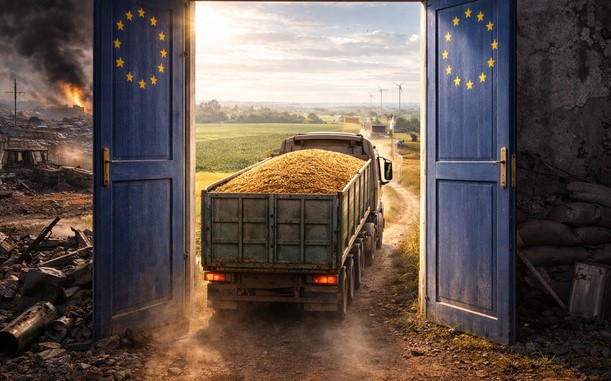
The fifth year of the full-scale war in Ukraine is ongoing. According to estimates by the Kyiv School of Economics, agricultural losses over these years amount to nearly $82 billion, with the agricultural sector ranking second in terms of damage after industry.
Whether the agricultural sector can shift from survival mode to stabilization under such conditions — and what is needed for this — was discussed during the online event of the Ukrainian Agribusiness Club (UCAB) titled “The Fourth Year of russia’s Full-Scale Aggression Against Ukraine Through the Eyes of a Ukrainian Farmer.”
According to Nazar Bobytski, Director of the UCAB EU Office, access to sales markets is the key survival factor: “Access to global markets is our traditional source of strength. The ability of Ukrainian farmers to export is becoming a matter of life and death for the Ukrainian economy.”
European Integration Must Not Become a Shock for Farmers
The issue of survival is currently the top priority for Ukrainian farmers, said Andrii Dykun, Chairman of the Ukrainian Agri Council. Working in frontline areas, many producers risk their lives and receive no assistance. Therefore, within the framework of European integration, a long transition period must be ensured.
“When it comes to integration into the EU, the main question is: how much will farmers have to pay? Studies on pesticides show that UAC members will lose between €70 and €150 per hectare in yield when they stop using certain pesticides banned in the EU,” he noted.
Many farmers and producers oppose the new laws, as they require significant investment. Therefore, negotiating teams and the government must insist on traditional transition mechanisms and financial support for domestic agricultural producers.
Accelerating European integration should not come as a shock to Ukraine’s agricultural sector; there must be balance, and this is the government’s key task today, emphasized Deputy Minister of Economy, Environment and Agriculture of Ukraine Denys Bashlyk.
EU Standards Are Not Just Rules, but a Prerequisite for Access to the European Market
Oleksandra Avramenko, Head of the European Integration Committee of the Ukrainian Agribusiness Club (UCAB), emphasizes that exports play a decisive role in farmers’ survival. Last year, agri-food exports accounted for 56% of Ukraine’s total merchandise exports. In monetary terms, this amounted to $22.5 billion — one of the lowest figures since 2021.
Ukrainian farmers continue to play an important role in the global market. Even during the war, they remain among the largest producers and suppliers of sunflower oil, corn, wheat, soybeans, poultry, and more. Based on the results of 2025, most Ukrainian agri-food exports are directed to the EU. War-related logistics disruptions remain the main obstacle to shipments to more distant markets.
“On the one hand, Ukraine’s agricultural sector remains resilient, but on the other, it faces the challenges of war, reducing production. So, let’s be honest — its capabilities are currently very limited,” notes Oleksandra Avramenko.
Export Support and Guarantee Funds for Shipping Companies Could Improve Market Access
In 2021, 95% of Ukrainian agri-food products were exported through Black Sea ports. Before the full-scale war, this was Ukraine’s main export route and it remains so today. However, ports primarily handle bulk cargo. As for packaged goods or value-added products, even with the opening of the Solidarity Lanes, they lose their competitive advantage in third-country markets due to high logistics costs. According to Avramenko, although producers aim to manufacture and export more processed products, they are not always able to sell them profitably.
Therefore, Ukrainian farmers need support now more than ever. In the expert’s view, supporting Ukrainian businesses in such difficult times should include: restoring export conditions to the level of 2021, reducing insurance costs, and ensuring access to a greater number of container vessels in Black Sea ports. By engaging the European Commission, European export credit agencies, and shipping companies, additional reserve funds could be created to insure vessels, cargo, and goods. This would improve Ukrainian producers’ access to third-country markets.
“Odesa is constantly under shelling — cargo and vessel suppliers need protection. European traders are heavily involved in the export activities of Ukrainian producers. From a business perspective, additional guarantees open pathways to third markets, particularly markets in the Global South,” Avramenko explains.
While surviving under wartime conditions, Ukraine’s agricultural sector is simultaneously modernizing to meet the requirements for accession to the EU.
“Ukraine is already developing infrastructure for a paying agency, the IACS system, and other instruments essential for integration into the EU’s Common Agricultural Policy. We must work as if we are becoming an EU Member State on January 1, 2027. However, the question of Ukrainian agriculture’s access to EU structural funds remains open — funds that previously supported farmers in implementing European production standards during earlier rounds of enlargement. This support is critically important for domestic producers to accelerate their preparation, as well as to assist small farmers and those operating in frontline territories,” the expert concluded.
Material prepared by the platform AgroPortal.ua.