Oleg Khomenko: “Ukrainian agriculture remains one of the key elements of food security for both Ukraine and Europe”
Category:
 News
News
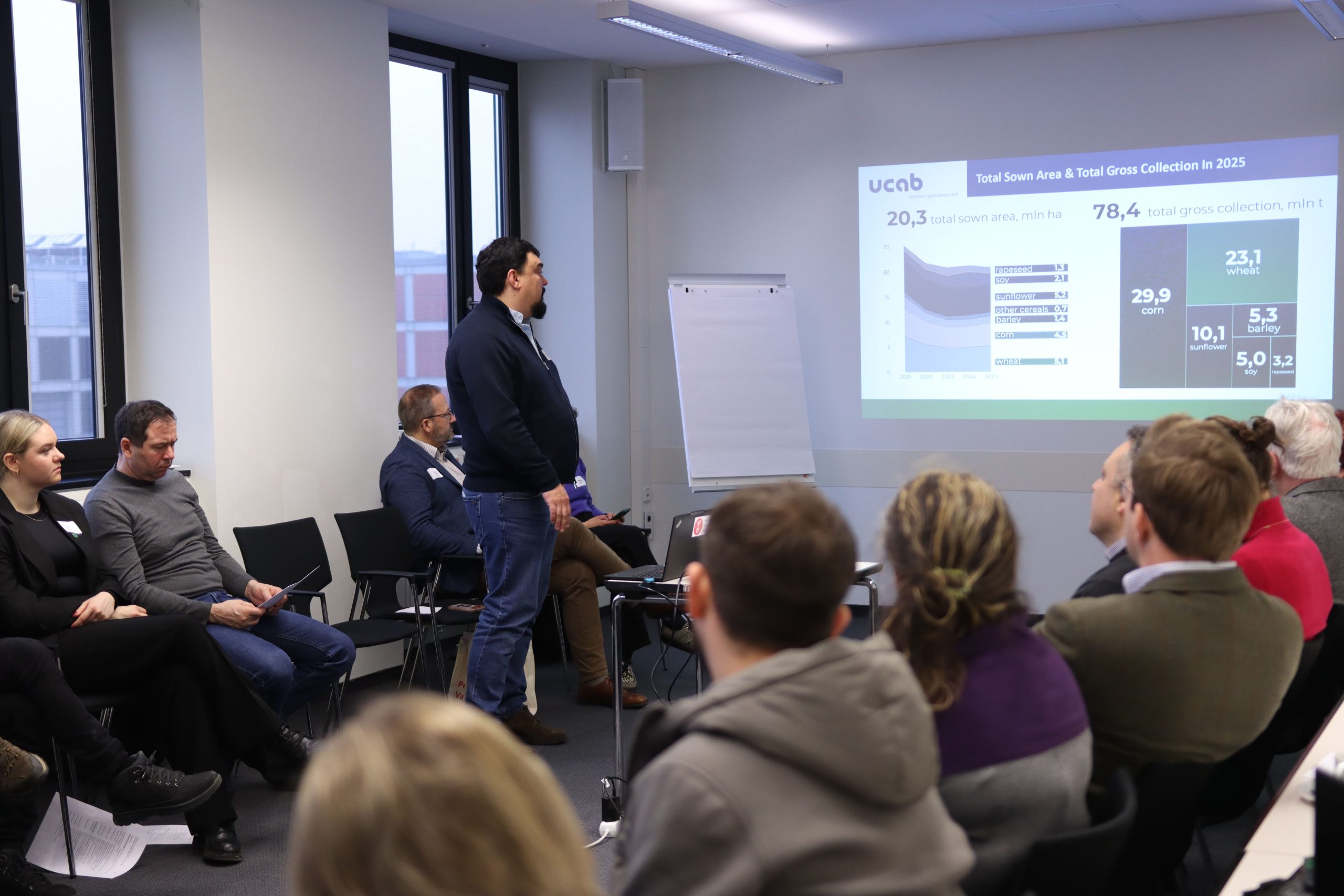
“Since February 2022, the war has inflicted more than USD 100 billion in losses on Ukraine’s agricultural sector: hundreds of thousands of hectares of agricultural land have been mined, port infrastructure has been systematically shelled, and production and exports have declined. Despite this, the sector has managed to preserve its core agricultural production potential.
At present, logistics remain the key challenge. Before the war, 94% of agricultural exports were shipped through Black Sea ports, but in 2022–2024 Ukraine was forced to reorient toward alternative routes. The restoration of the Black Sea corridor in 2025 became critically important; however, ongoing shelling of ports continues to create risks and additional costs for businesses.
The situation is further complicated by economic factors such as the devaluation of the national currency, energy blackouts, labor shortages, high interest rates, and limited access to financing. Taken together, these factors are gradually reducing the competitiveness of Ukrainian producers in third markets.
Climate change is also exerting significant pressure. Over the past 30 years, the average temperature in Ukraine has risen by 1.2°C, leading to a reduction in cultivated areas, droughts in southern regions, floods in the north, crop losses, and degradation of water resources.
At the same time, under these extremely difficult operating conditions, Ukraine is not a ‘problem’ for the EU. On the contrary, it is capable of strengthening the expanded European agri-food system. The combination of Ukraine’s scale and biomass with European technologies, rules, and financial instruments can reinforce the Single Market, develop the bioeconomy and value-added chains, and reduce the EU’s dependence on external suppliers.
“In conclusion, the following concrete steps should be noted to deepen cooperation between Ukraine and the EU already today:
-
early involvement of Ukraine as an active observer in the reform of the EU’s Common Agricultural Policy;
-
relaunch and expansion of the EU–Ukraine agri-food dialogue;
-
development of joint investment projects in ‘close-to-home’ value-added chains.
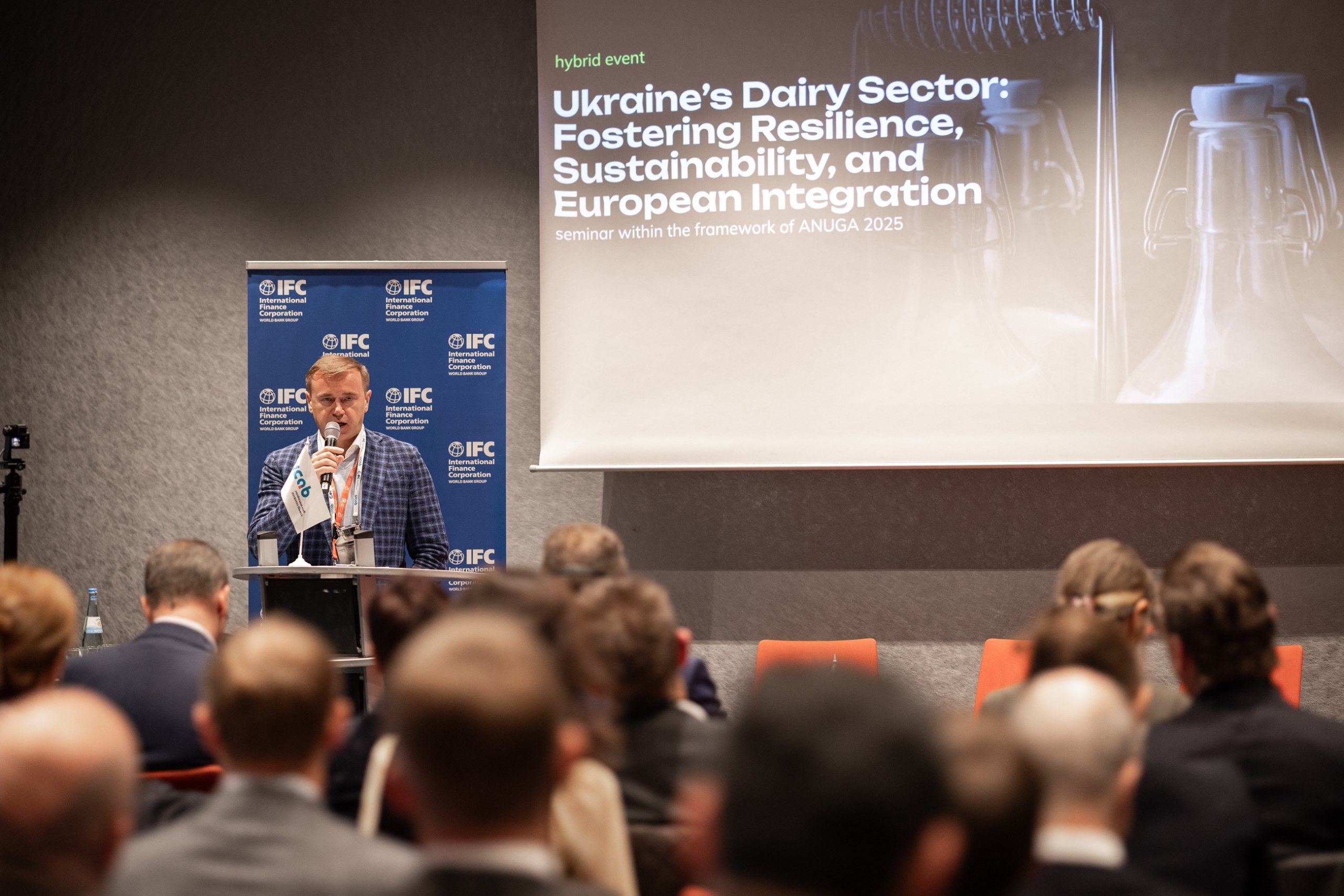
It is precisely these practical steps, in our view, that will make it possible to turn the current crisis into a foundation for Europe’s future resilience and food security,” the expert stated in his speech.