Ukrainian agricultural outlook presented with key data for 2025
Category:
 News
News
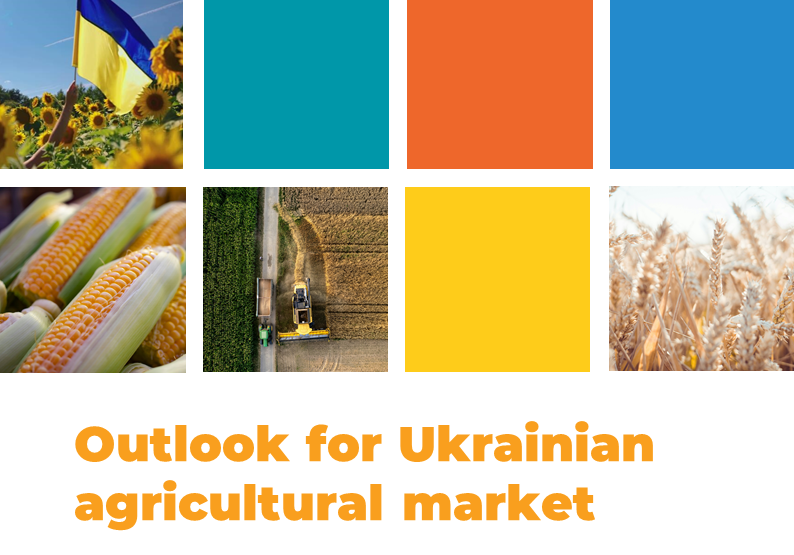
UCAB, together with the Ministry of Economy, Environment and Agriculture of Ukraine, presents the second edition of the Outlook for the Ukrainian Agricultural Market – an analytical report combining production statistics, export data, and sector expertise for 2025 to provide partners with an understanding of the structure, scale, and real operating capacity of Ukrainian agriculture in wartime conditions. The Outlook was prepared with the assistance and support of the Ministry of Economy, Environment and Agriculture of Ukraine.
The research records that despite security challenges and sector losses exceeding $100 billion, the Ukrainian agri-food sector remains the foundation of national economic resilience. The document covers a comprehensive analysis of trends in production, processing, and trade across key product groups – from grains and oilseeds to animal products and processing. It also demonstrates how the return of logistics routes to maritime corridors and deepening integration with the EU form the prerequisites for agricultural trade for 2026. View the research at the link: https://cutt.ly/XtQeCL7O.
“This Outlook helps to shape realistic expectations: Ukraine’s agricultural production volumes cannot be instantly adjusted in response to changing market opportunities, as production and export capacities are determined by security conditions, logistics, weather factors, and available resources. By systematizing trends, we offer a transparent basis for planning. I hope this research will become a useful tool for predictable partnership in 2026, where every market participant understands today’s opportunities and limitations,” noted Taras Vysotskyi, Deputy Minister of Economy, Environment and Agriculture of Ukraine.
According to the study, in 2025, the agri-food sector provided the country with 56.1% ($22.5 billion) of export earnings, which significantly exceeds the share of the pre-war year 2021 (40.7%). The European Union has definitively solidified its status as the main partner, accounting for 47.5% of Ukrainian agro-exports, helping to balance conditions of complicated access to traditional markets of the Global South.
At the same time, the structure of Ukrainian crop farming in the 2025/26 marketing year underwent transformations, reflecting both market signals and wartime restrictions: wheat areas increased to 5.1 million ha, corn to 4.5 million ha, however, soybean areas decreased to 2.1 million ha after an exceptionally high previous season, while rapeseed remained stable at the level of 1.3 million ha.
“Ukrainian agriculture operates under permanent constraints, and this report illustrates how business balances between issues of security, logistics, and profitability. Data and figures testify that despite the consequences of the war and the destruction of industrial chains, the sector ensures global food security and demonstrates the ability to quickly reorient production and export routes,” added UCAB Director General Oleh Khomenko.
UCAB sincerely thanks the Ministry of Economy, Environment and Agriculture of Ukraine for its active assistance in preparing the research.