In the 2025/26 marketing year (MY), Ukraine will export 23.8 million tons of corn, which is 8.3% more than in the previous marketing year
Category:
 UCAB Survey (EN)
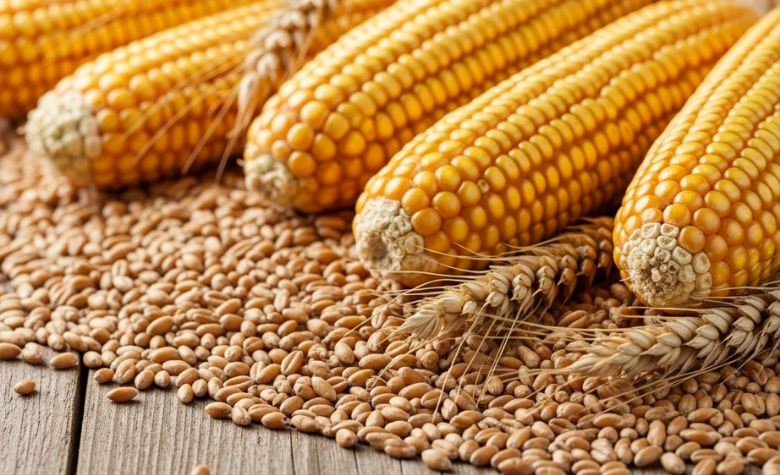
According to forecasts, in the 2025/26 MY, the harvest will reach 29.9 million tons, which is 11.2% higher compared to the previous marketing year, although still 6.8% below the average of the last five years.
Key insights for this crop this season:
- Improved gross output due to expanded planting areas: in the 2025/26 MY, farmers managed to increase corn planting areas by 11.6% to 4.5 million hectares. However, this figure remains 3.9% below the five-year average. The season was marked by challenging weather conditions: heavy autumn rains led to prolonged harvesting, which is still ongoing. As a result, the average yield amounted to 6.6 t/ha, which is 0.3% lower than in the previous MY. Nevertheless, the expansion of planted areas enabled a 11.2% increase in gross output, reaching 29.9 million tons.
- Export decline and lower carryover stocks: In the 2024/25 MY, corn exports decreased by 25.6% to 22.0 million tons. The decline was driven by lower production volumes and a significant reduction in carryover stocks — from 6.4 million tons in the 2023/24 MY to 3.7 million tons in the 2024/25 MY. The recovery in production in the 2025/26 MY will allow exports to increase to 23.8 million tons.
- Domestic consumption mainly for feed purposes: total domestic corn consumption in Ukraine in the 2025/26 MY is estimated at 6.2 million tons. Of this amount, the largest share — 5.2 million tons — will be used for animal feed. In addition, 182 thousand tons are allocated for seed purposes, and 418 thousand tons will be used for non-food processing.
Conclusion: the Ukrainian corn market remains resilient. Despite the loss of acreage due to the temporary occupation of territories by russian troops and difficult weather conditions during harvesting, farmers continue to expand planting areas and increase gross output. The crop meets domestic feed demand and is returning to export growth, remaining one of the pillars of Ukraine’s exports. Thanks to this, Ukraine reliably maintains its positions in strategically important EU and Middle Eastern markets.
Learn more in the Agricultural Outlook 2025: https://cutt.ly/XtQeCL7O