Transit Through Poland Amidst the Port Blockade: Synergy of Efforts to Preserve Ukrainian Agri-Exports
Category:
 News
News
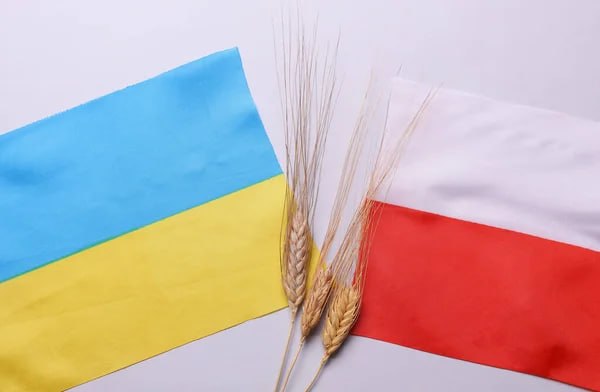
On August 20, the Ukrainian Agribusiness Club (UCAB), in partnership with the UCABevent agency, held an online discussion “Alternative Export Routes: The Synergy of Ukrainian and Polish Logistics Amid the Black Sea Blockade”. During the event, Ukrainian agricultural producers and representatives of Polish business focused on practical steps of cooperation to ensure stable exports of agricultural products through Poland while Ukraine’s maritime routes remain restricted.
Among the key issues discussed were: overcoming the consequences of the Black Sea corridor blockade, assessing the throughput capacity on the Rava-Ruska – Werchrata/Sławków, Mostyska – Medyka, and Yahodyn – Dorohusk routes, as well as optimizing border procedures.
Opening the event, Oleh Khomenko, Director General of UCAB, noted: “Alternative logistics through Poland and other EU countries should not be viewed merely as an emergency fallback. In the long term, Ukraine requires a diversified logistics system connecting our sector with European railway terminals and ports. We need predictability, because agricultural producers cannot stop harvesting or simply store millions of tons of grain inside the country.”
The discussion was moderated by Andrzej Szurek, Founder of Tarlan Strategy and Non-executive Director of IMC, who directed the conversation toward the synergistic aspects of building cross-border value chains for both countries.
The government’s perspective on the consequences of the Black Sea corridor blockade and the need to strengthen the Solidarity Lanes was presented by Taras Vysotskyi, Minister of Agrarian Policy and Food of Ukraine: “The current situation is much more difficult than in 2022, because it is the period of harvesting, and all logistics capacities are filled with internally produced European goods. Alternative routes can cover up to 2.5 million tons of export per month against our need of 5 million tons. However, we see the possibility to double the transit through Poland—up to 600,000 tons per month. For this, it is necessary to increase the number of trains at the relevant border crossings and ensure the 24/7 work of inspectors.”
Meanwhile, Taras Kachka, Deputy Prime Minister for European and Euro-Atlantic Integration of Ukraine (2025-2026), believes that the success of transit lies in the proper organization of processes: “We have a good chance to arrange all processes, looking at them from the experience of 2022-2023. We should use Polish transit routes for the goods that are most suitable for the existing forms of logistics—road or railway transport, and arrange border control in a way that makes it efficient, but without requesting simplifications that can later lead to manipulations. The biggest help from governments would be the simplification of procedures, especially phytosanitary and veterinary checks, but strictly in line with the rules. We need to arrange logistics in a way that ensures maximum volumes without creating internal pressure on the Polish market.”
An important part of the webinar was the exchange of experience directly with representatives of Polish business and the civil society sector. Bartosz Pęczkowski, Owner and Chairman of the Board of Frontier Logistics, highlighted three major logistics bottlenecks: a lack of bulk storage in Polish ports, a shortage of specialized wagons, and the capacity of border crossings. As a solution, he proposed attracting investments: “We are currently developing a project and looking for Ukrainian co-investors to build a dedicated terminal for Ukrainian grain in Polish ports. I also urge our Ukrainian partners not to be afraid to use open-top wagons with tarpaulins (tents) — there are already cases of successfully exporting 100,000 tons of rapeseed without any quality issues.”
For her part, Sylwia Krasoń-Kopaniarz, Vice President of the International Association of Polish Entrepreneurs in Ukraine, emphasized the critical importance of communication: “Polish farmers may naturally be concerned that Ukrainian grain will enter the Polish market, so the mechanism of transit itself must be clearly explained. We need a long-term strategy for cooperation and the rebuilding of trust between Ukrainian and Polish agricultural producers.”
This opinion was echoed by Victor Halchynskyy, Board Member of the civil society association Linia102.ua, who also focused on the issue of railway infrastructure development: “There are hidden logistics reserves between Ukraine and Poland, such as the rebuilt European-gauge railway route from Przemyśl to Khyriv. It is capable of accepting at least 10 pairs of freight trains per day (up to 3.6 million tons of cargo per year). The main obstacle is the lack of a railway border crossing checkpoint in Malhowice, although the legal framework allows for the organization of temporary control there. Business is ready to work, only political will is needed.”
Valeriy Tkachov, Deputy Director of the Commercial Work and Freight Transportation Technology Department of “Ukrzaliznytsia”, spoke about the overall situation with exports through Poland: “During the first 7 months of 2026, only 525,000 tons of grain were exported through Poland. In the last two weeks, we have seen an increase in grain transfers to Poland from 14 to 50 wagons per day. Theoretically, Ukrzaliznytsia has a reserve to transfer another 425,000 tons of grain every month, but the main obstacle remains the excessively high transit cost of 90-110 euros per ton. This kills the margins of agricultural producers, forcing them to take a wait-and-see approach.”
Iryna Novikova, Commercial Director of Laude.Ua (Laude Smart Intermodal S.A.), added that unpredictability at the border also creates significant financial risks: “The biggest challenge is transit under strict customs supervision with electronic seals. Duplication of document requirements and the absence of veterinary inspectors on weekends result in trains idling at the border from Friday to Monday.”
Practical experience in building logistics chains was shared by representatives of leading exporting companies: Viacheslav Chuk, Commercial Director of Astarta-Kyiv, Oleksandr Verzhykhovskyi, CEO of IMC, and Oleksandr Golub, Authorized Signatory of UP Trading. “The logistics crisis encourages us to diversify: to expand transshipment capacities at the border, to develop container deliveries, loading them with grain for the return trip to Polish ports,” noted Oleksandr Golub. According to Oleksandr Verzhykhovskyi, Ukraine should prepare for a long-term scenario that may turn out to be full of new challenges for agricultural producers. Viacheslav Chuk added: “This time the situation is more difficult than in 2022, but this only means that we have to join our efforts even more. Solutions will definitely be found through our readiness to cooperate.”
Ukrainian Agribusiness Club association and the UCABevent agency sincerely thanks all participants, the moderator, and the speakers of the event for an open dialogue, expert analytics, and the readiness to jointly seek effective logistics solutions. Uniting the efforts of Ukrainian and Polish businesses is the key to stable exports and the infrastructure development of both countries.