Oleksandra Avramenko: “Ukraine can complement and strengthen the strategic autonomy of the European Union”
Category:
 News
News
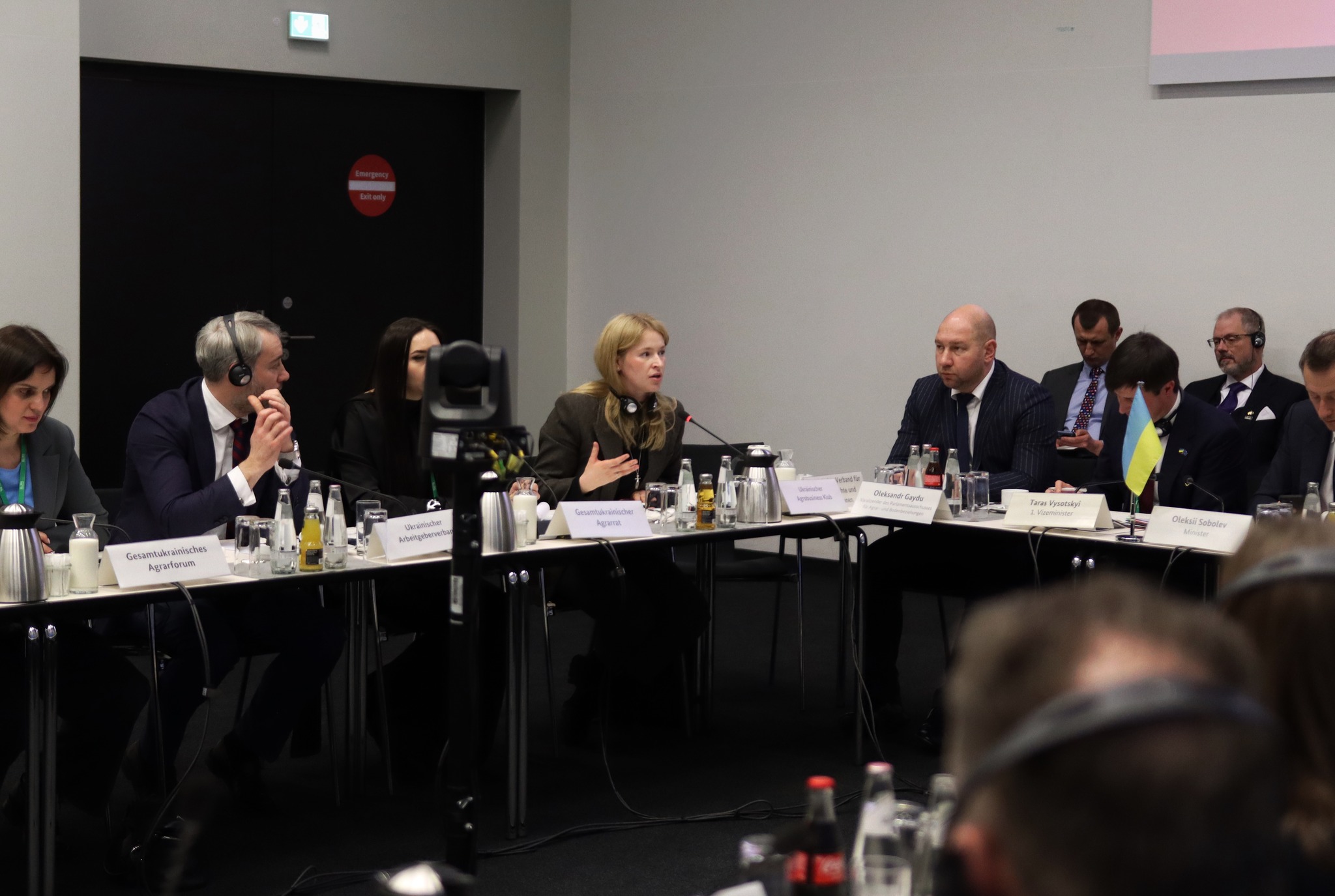
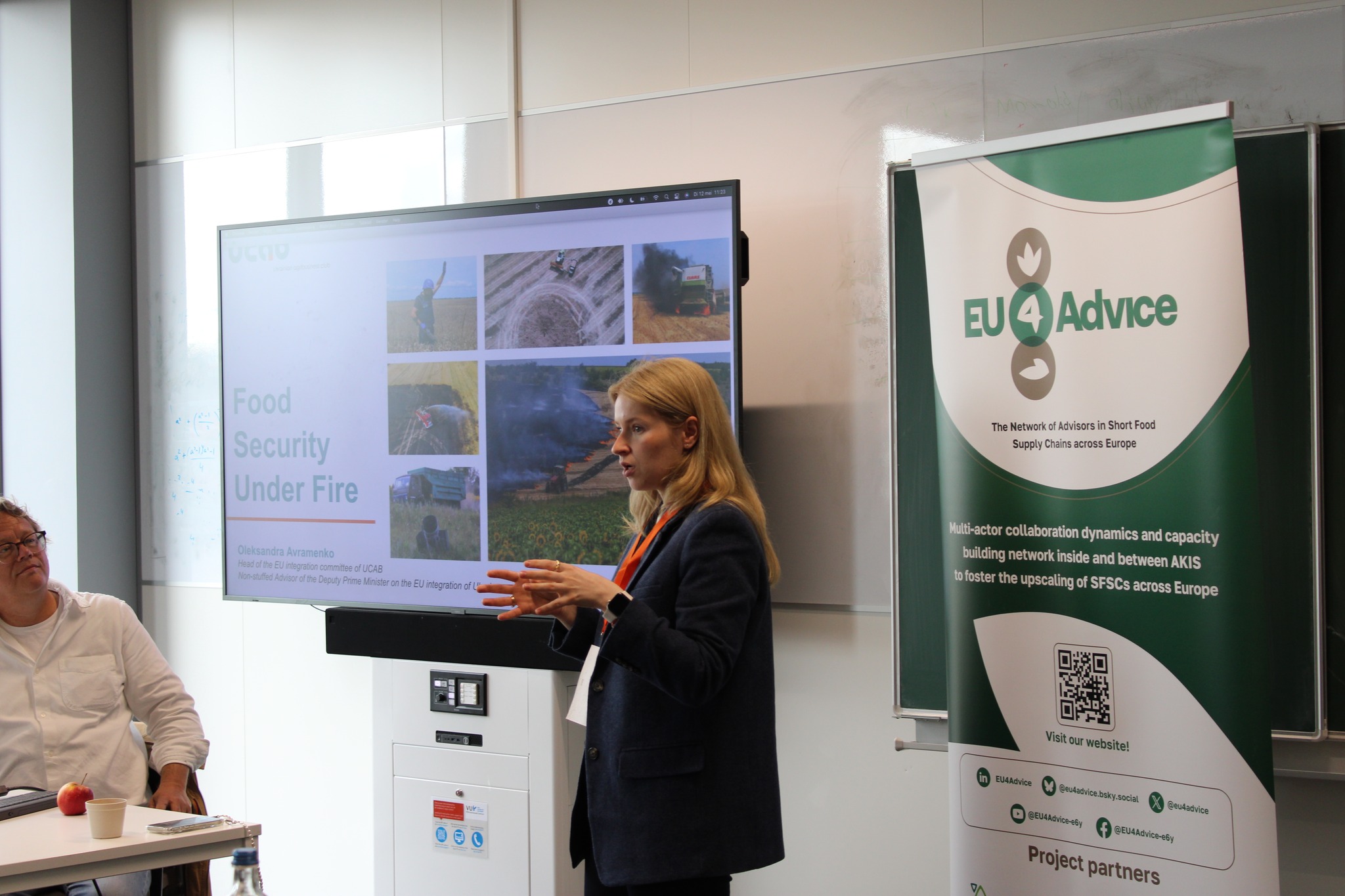
“Ukraine can complement and strengthen the strategic autonomy of the European Union,” emphasized Oleksandra Avramenko, Head of the EU integration committee of UCAB, in her speech during the German-Ukrainian Association Meeting held within the framework of the international exhibition Grüne Woche in Berlin.
“Dialogue between Ukraine and the EU today is not just important, but critically necessary. Ukraine is simultaneously living within three major dimensions of challenges: European integration, a full-scale war, and climate change. It is precisely this combination of factors that creates a unique yet extremely complex context for its agricultural sector.
Despite the external resilience and competitiveness of Ukrainian agribusiness, the real conditions of its operation remain exceptionally harsh: regular blackouts, electricity shortages, dependence on imported inputs, depreciation of the national currency, a reduction in human capital, logistical constraints, and attacks on Black Sea ports. All of this directly affects production and export volumes, which is particularly sensitive given that the agricultural sector accounts for more than half of Ukraine’s total exports and forms the backbone of support for its economy. In particular, the decline in exports by EUR 2 billion in 2025 alone is a telling signal of the difficult operating conditions facing the agricultural sector.
At the same time, European integration remains Ukraine’s only strategic choice, and this path requires a pragmatic and balanced approach. Recent studies indicate that merely transitioning to European standards in the field of plant protection products will cost the Ukrainian agricultural sector around EUR 4 billion, a sum that is extremely burdensome in wartime conditions. That is why the issue of transition periods is not a sign of unwillingness to adapt, but a necessary condition for preserving the competitiveness of Ukrainian producers.
It is also important to note separately that the adaptation of requirements is a two-way process. The European chemical industry must likewise be prepared for increased demand from the Ukrainian agricultural sector following updates to Ukrainian legislation on plant protection products, as otherwise there is a risk of competition for limited resources from both Ukrainian and European farmers. This would weaken the positions of both the EU and Ukraine in third markets. For this reason, such sensitive and politically significant issues require systematic discussion at the level of business associations and regular agri-political dialogue.
In conclusion, it should be emphasized that Ukraine’s integration into the European agricultural sector is not a challenge for the EU, but an opportunity. Ukrainian agriculture can become a driver of bioeconomy development, support the green transition, the chemical and processing industries, and share unique experience in business survival and adaptation under unprecedented crisis conditions caused by war. It is precisely this experience that can become an important component of future shared European agricultural resilience.”